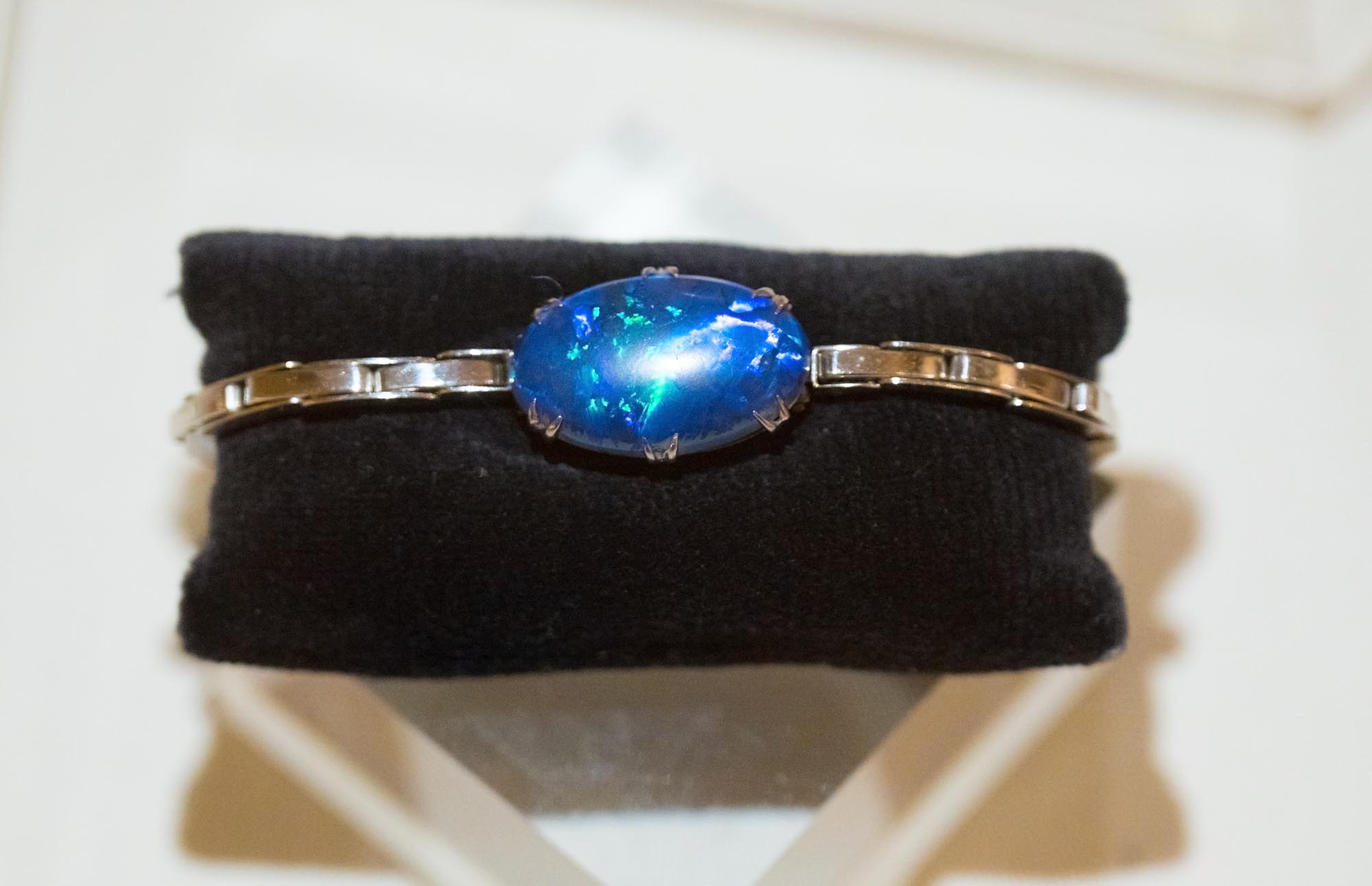


The name opal derives from the ancient Greek and Latin words ‘Opallios’ and ‘Opalus’ meaning ‘to perceive a colour change.’
The opal has a long history of being used in decorative jewellery. The Romans considered opals as the most precious of all gems, ranking them second only to emeralds. They believed it represented good fortune, hope, and purity.
During the 19th century people’s attitudes towards opals began to change. In Sir Walter Scott’s, 1829, gothic novel “Anne of Geierstein”, the heroine is associated with opal jewellery. Her demise and subsequent turning into a heap of ash was interpreted, at the time, as sign that opals were unlucky. The book was hugely popular, and the fate of the heroine had an impact on the sales and fashion for wearing opal jewellery.
Not everyone subscribed to the negative view of opals. A lover of the beauty of opals, Queen Victoria made certain that all her subjects knew she did not put any stock in the rumours, and superstitions surrounding the stones. She wore and collected opals throughout her reign. Her intervention and the discovery of the opal mines in Australia in the 1840s saw the slow restoration of the opal's reputation.
- These objects were chosen by S
- She is originally from the Democratic Republic of China
- Her favourite objects were the Opal Jewellery
“I love the opals. It reminds me of the rich people in China who wear opals. The older people wear them, not the young people”.