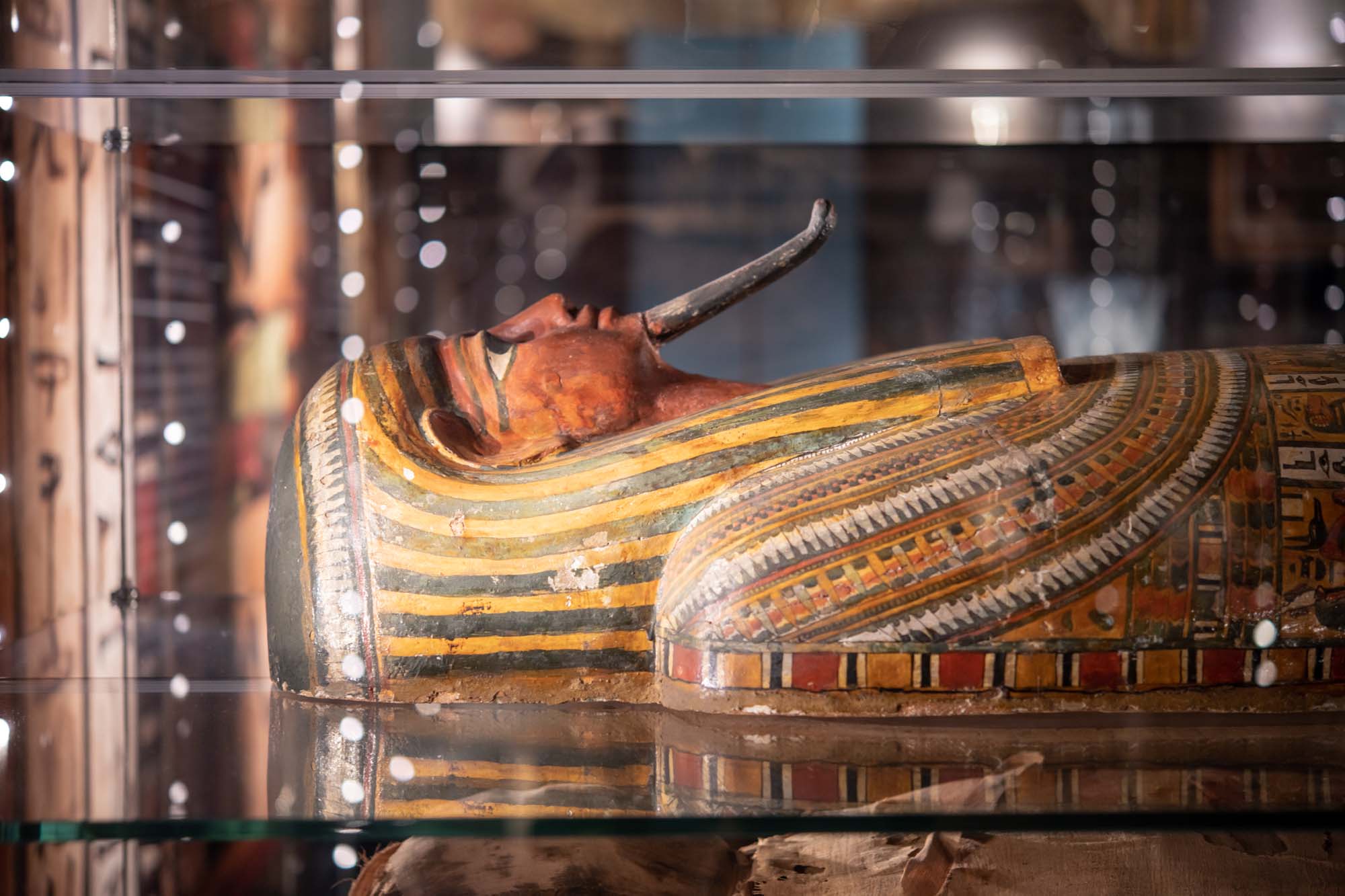


Extensive collections of the preserved remains of Ancient Egyptians, including mummies and skeletal fragments, are held in museums worldwide. In the UK, museums, universities, and other organisations hold 37,000 human remains from overseas. These items, often acquired during the 19th and 20th centuries, are now central to debates regarding ethics, display, and repatriation. Their preservation, driven by ancient religious beliefs in the afterlife, made them valuable, morbid commodities for private and public collectors, and, later, subjects of intense archaeological and historical fascination.
The English word mummy is derived from medieval Latin Mumia, a borrowing of the medieval Arabic word mūmiya (مومياء) which meant an embalmed corpse, as well as the bituminous embalming substance. This word was borrowed from Persian where it meant asphalt, and is derived from the word mūm meaning wax. The meaning of "corpse preserved by desiccation" developed post-medievally. The Medieval English term "mummy" was defined as "medical preparation of the substance of mummies", rather than the entire corpse.
Today, Leicester Museums is moving toward using the words “preserved remains of” with the person's name, if known, or cultural origin, instead of the term mummy.
- These objects were chosen by Osman
- He is originally from Sudan
- His favourite objects were the Mummified Remains of Ancient Egyptian people
“I’m interested in the way they kept the dead bodies for a long time. I saw mummified Egyptians in Sudan, but the museum is destroyed now”.
- These objects were chosen by Jah Alnasr
- He is originally from Eritrea
- His favourite objects were the Mummified Remains of Ancient Egyptian people
“I have never seen mummies before. I had heard about them but couldn’t imagine them”.