

The amulets are not the only Ancient Egyptian items found in Leicester. When England was conquered and became a Roman province in AD 43 under Emperor Claudius, Egypt already was under the control of the Roman Empire. Egypt became a Roman province in 30 BC following the death of Cleopatra VII after her defeat by Augustus. As part of the Roman Empire, units recruited from Egypt, such as the Numerus Maurorum Aurelianorum or sailors from the Classis Alexandrina, were stationed at locations like Hadrian's Wall.
In 2015 a small, rectangular ivory panel was found during the excavation of a large Roman townhouse in Leicester, situated beneath the John Lewis car park. It is thought to be from a box. Relief-carved ivory boxes are extremely rare discoveries, and this fragment is exceptional because of its design. Unusually, instead of belonging to a classical tradition, it depicts the Egyptian god Anubis squatting amongst lotus flowers and grasping a lance in his right hand. We cannot be certain, but perhaps its owner, an inhabitant of the townhouse, was a wealthy military officer who came from or served in North Africa before moving to Roman Britain. The ivory panel is on display at Jewry Wall Museum.
- These objects were chosen by Abdelaziz
- He is originally from Sudan
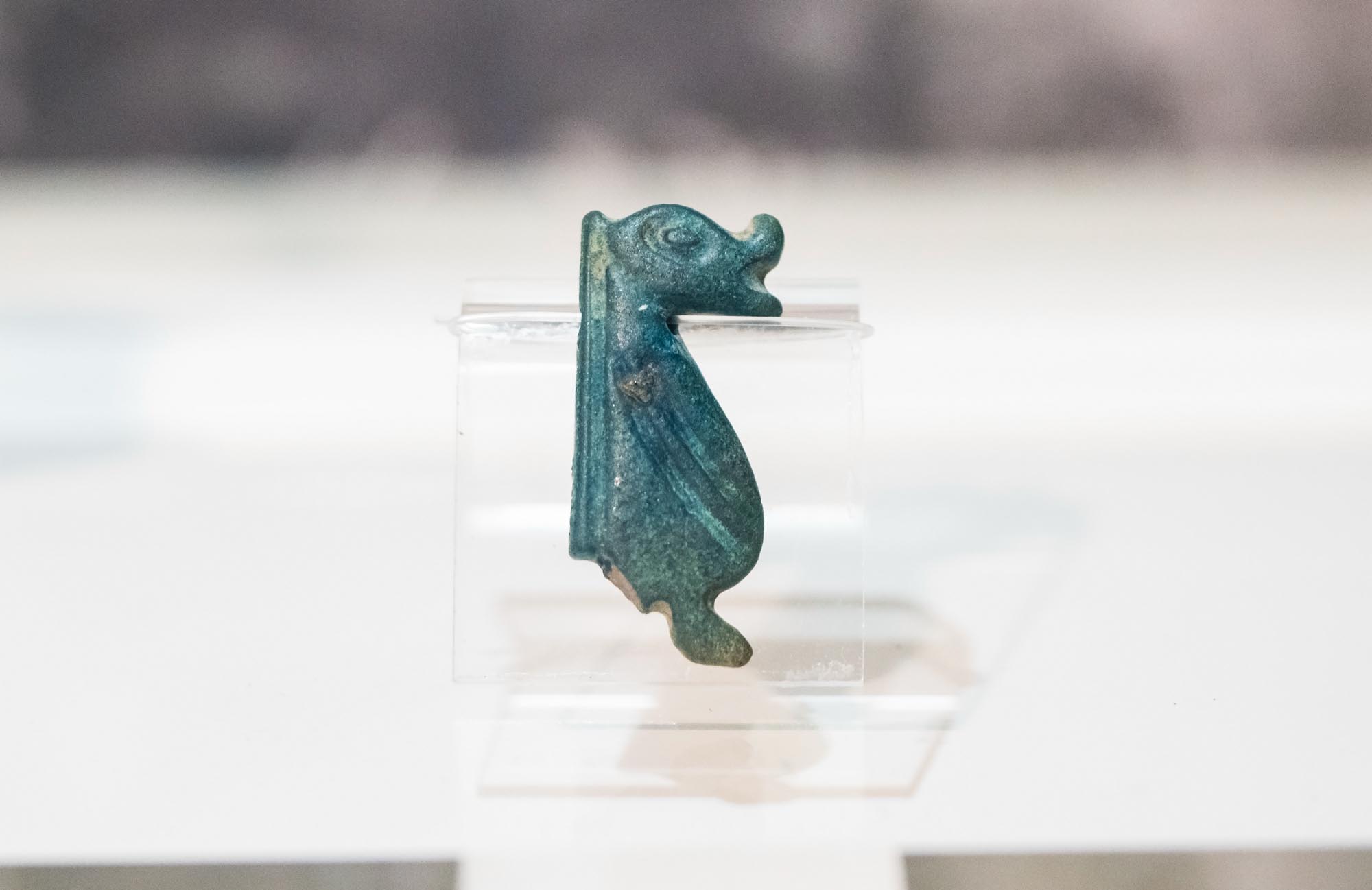
- His favourite objects were the Egyptian Amulets
“I learnt about how the ancient Egyptian’s religion and culture reached Britain, specifically Leicester. And that the Roman Empire helped spread culture and religion across huge distances, and Leicester was part of a global cultural network”.