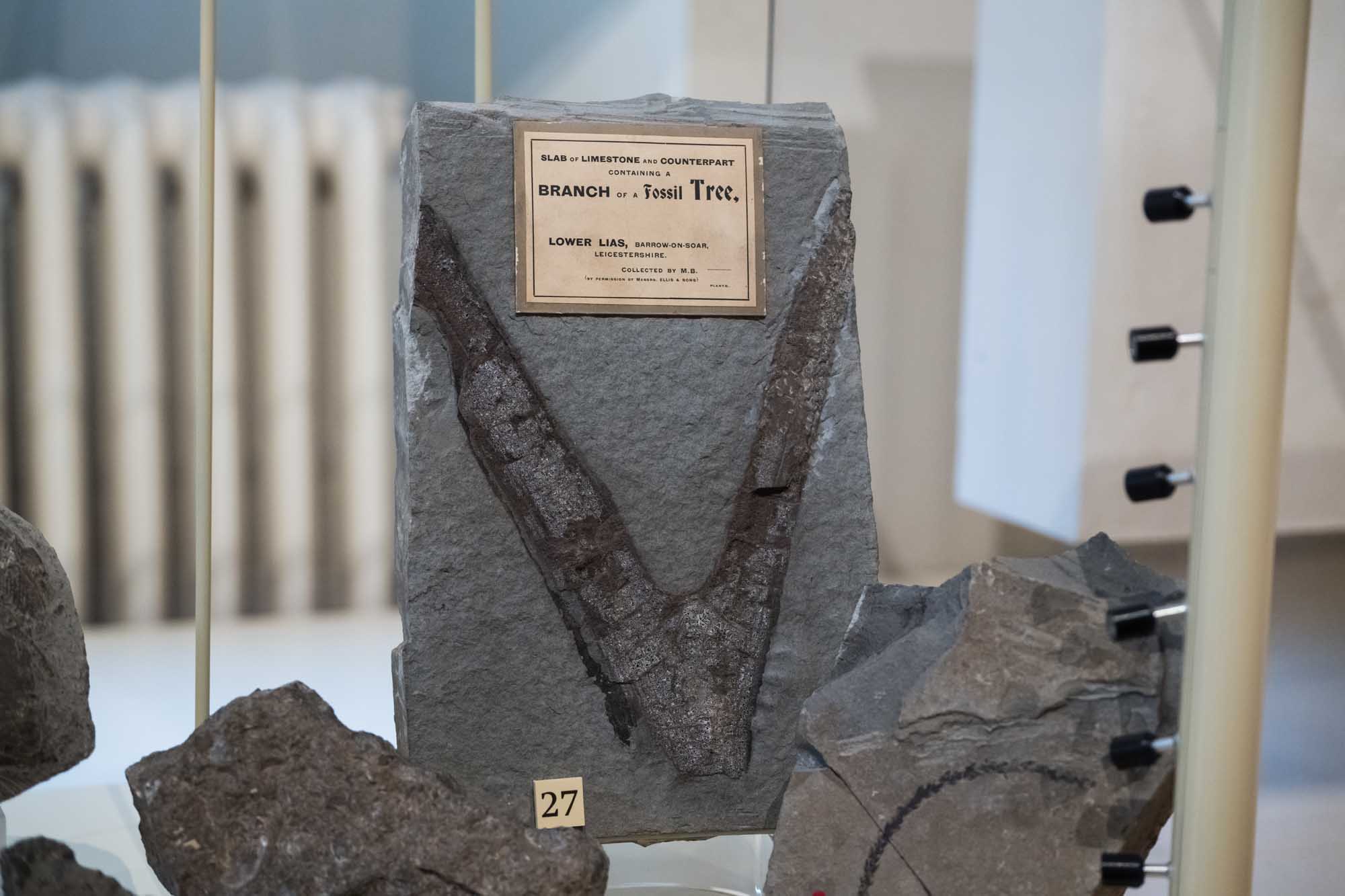


The fossil tree is from the prehistoric era called the Jurassic. This period was dominated by well-known dinosaurs such as Diplodocus, as well as other sauropods such as the Cetiosaurus on display at Leicester Museum & Art Gallery.
As for the plant kingdom, the Jurassic was the age of the gymnosperms – a group of seed-producing plants that includes conifers, cycads and ginkgoes. There’s some speculation that flowering plants, also known as angiosperms, appeared in the Jurassic, but currently there is no conclusive evidence to support this.
The ginkgo tree, also known as the maidenhair tree, is sometimes called a 'living fossil'. Its ancestors first appeared around 270 million years ago during the Permian times when trilobites were alive. It survived three major mass extinctions, including the one that wiped out the dinosaurs. Fossils of Ginkgo leaves have been discovered that date back more than 200 million years. The fossils are almost identical to maidenhair tree leaves of today. Herbivorous dinosaurs, including Brachiosaurus, Diplodocus, and other late Jurassic to Cretaceous herbivores, likely ate ginkgo leaves. These trees served as a staple food source and provided habitat for many dinosaur species.
- This object was chosen by Meron
- She is originally from Eritrea
- Her favourite object was the Branch of a Fossil Tree
“I like learning about history, and it reminds me of the pictures and stories in my orthodox religion”.