


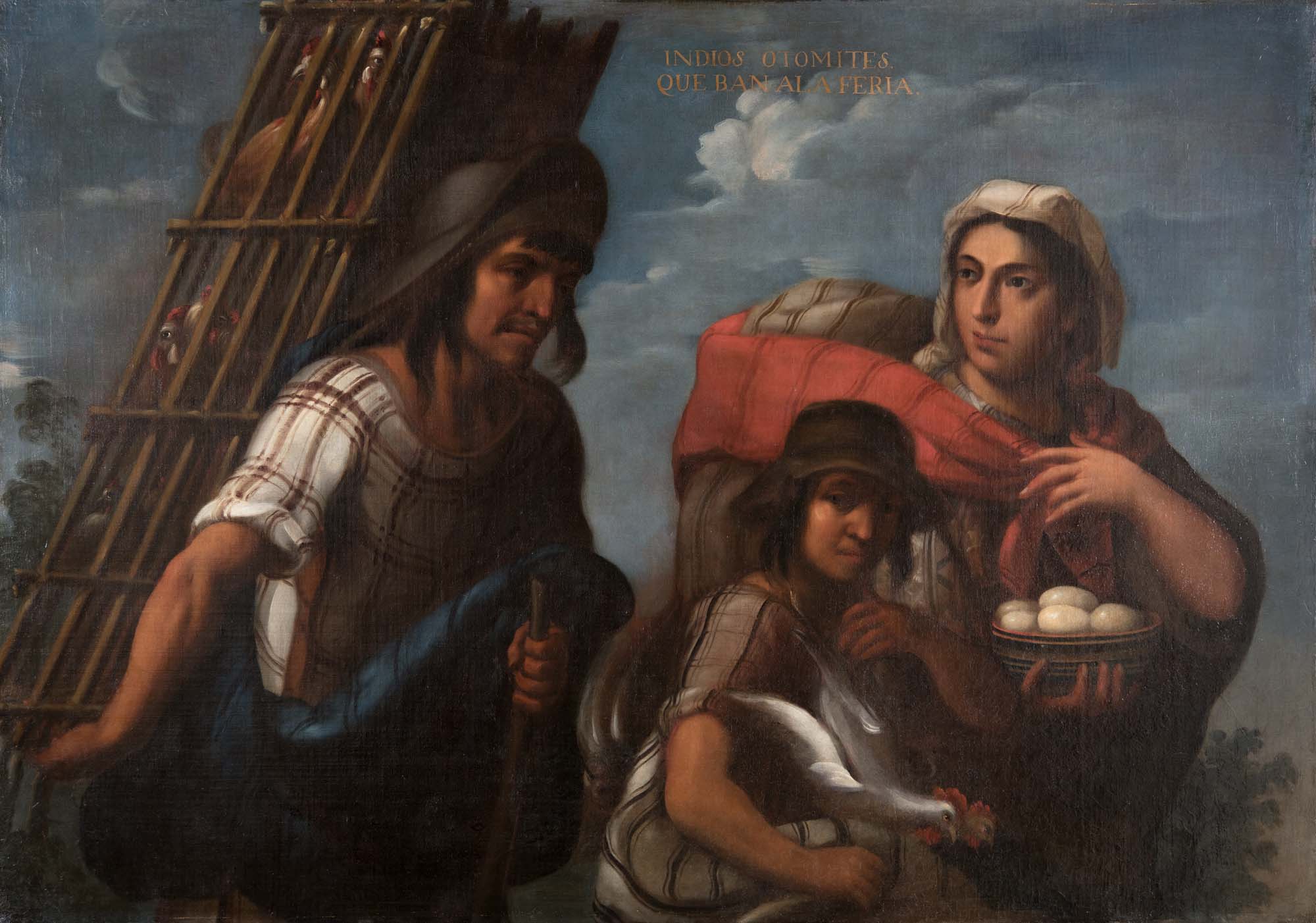
'Indios Otomites que ban a la Feria'
What are Castas?
Casta is a Spanish and Portuguese word for lineage, or class.
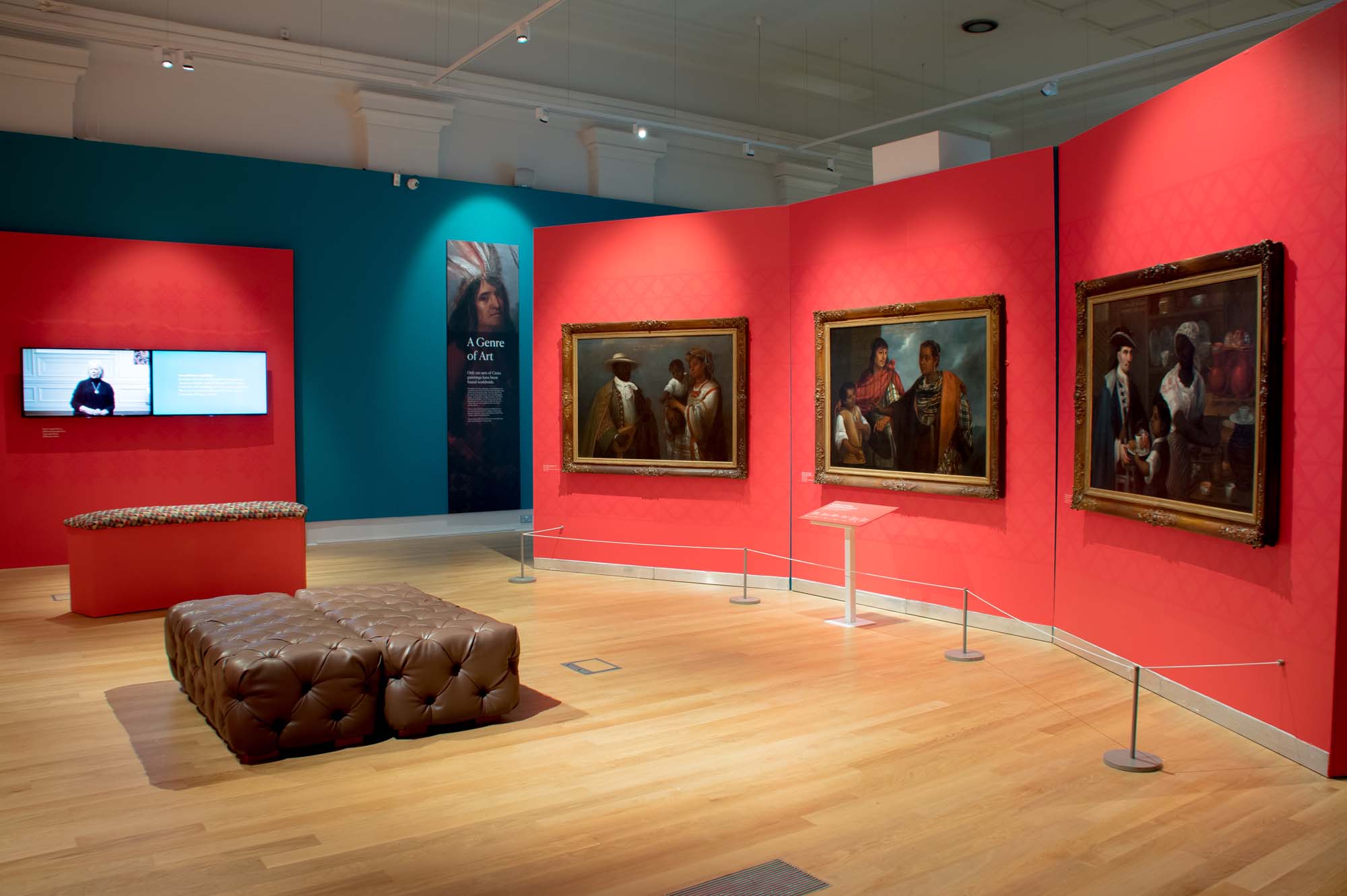
Casta paintings show multiracial couples with their children. They were created as a series of ordered paintings. Labels described the supposed race or “class” of both parents, and the “class” of their child.
Spanish elites used Castas to legally divide people living under colonial rule. Each race had a “class” within a social hierarchy. Yet, these painting also shows us a diverse, multicultural society. Enslaved people, Spanish settlers, and Indigenous people lived, intermarried, and thrived—despite colonial rule. Mexico gained independence in 1821, and outlawed Castas.
Dr. Ilona Katzew confirmed that Juan Rodríguez Juárez (or his circle) painted these Castas in 1715. They are some of the first ever painted, and a significant example of his work.
In 2023 Leicester Museum & Art Gallery held a temporary exhibition called 'Casta: The Origins of Caste'. Presented by Opal22, a Leicester based Black Arts & Heritage organisation, this exhibition showed the five newly restored paintings from the museum's collection. The exhibition delved into how we decode art and artefacts as they relate to global majority communities.
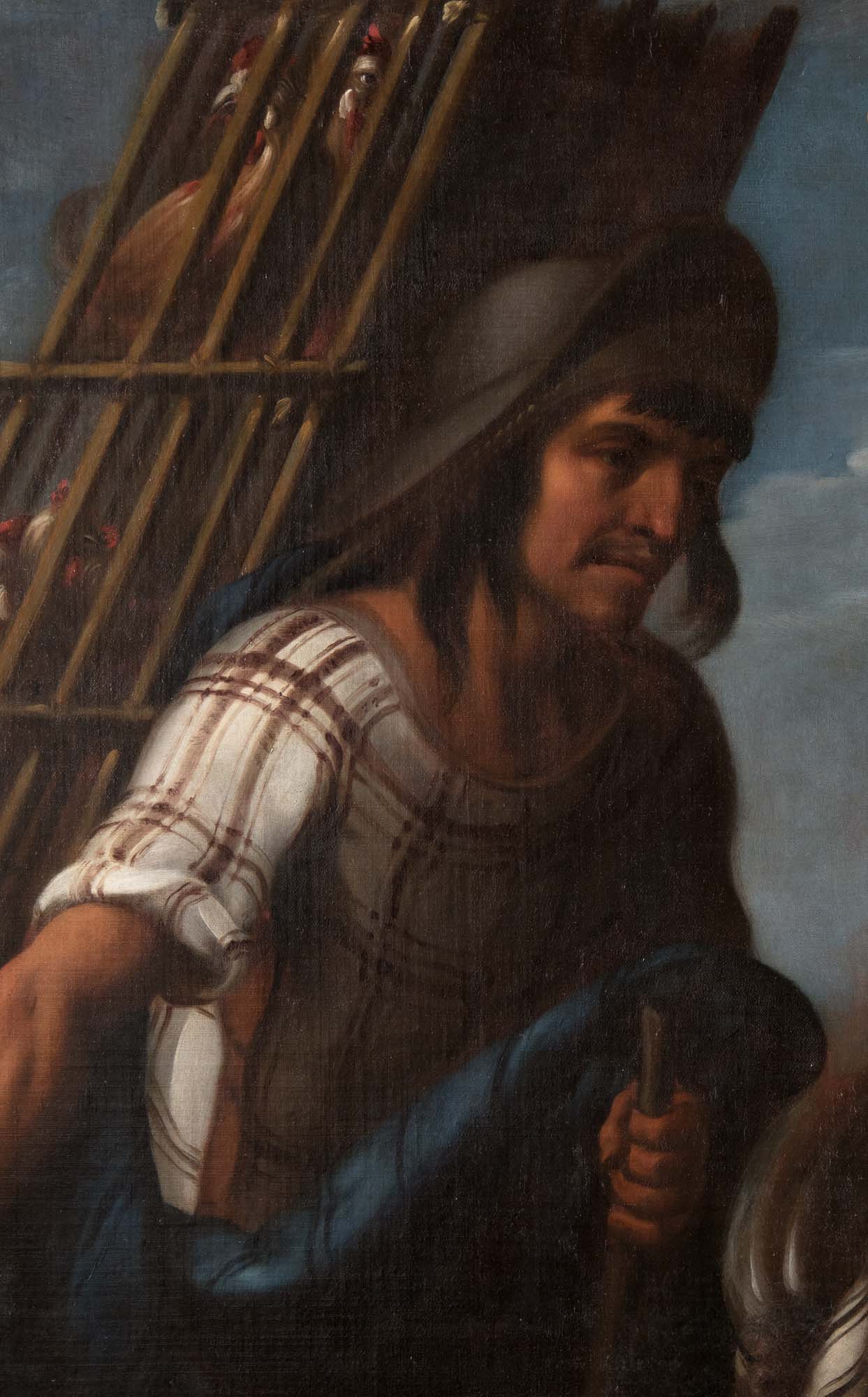
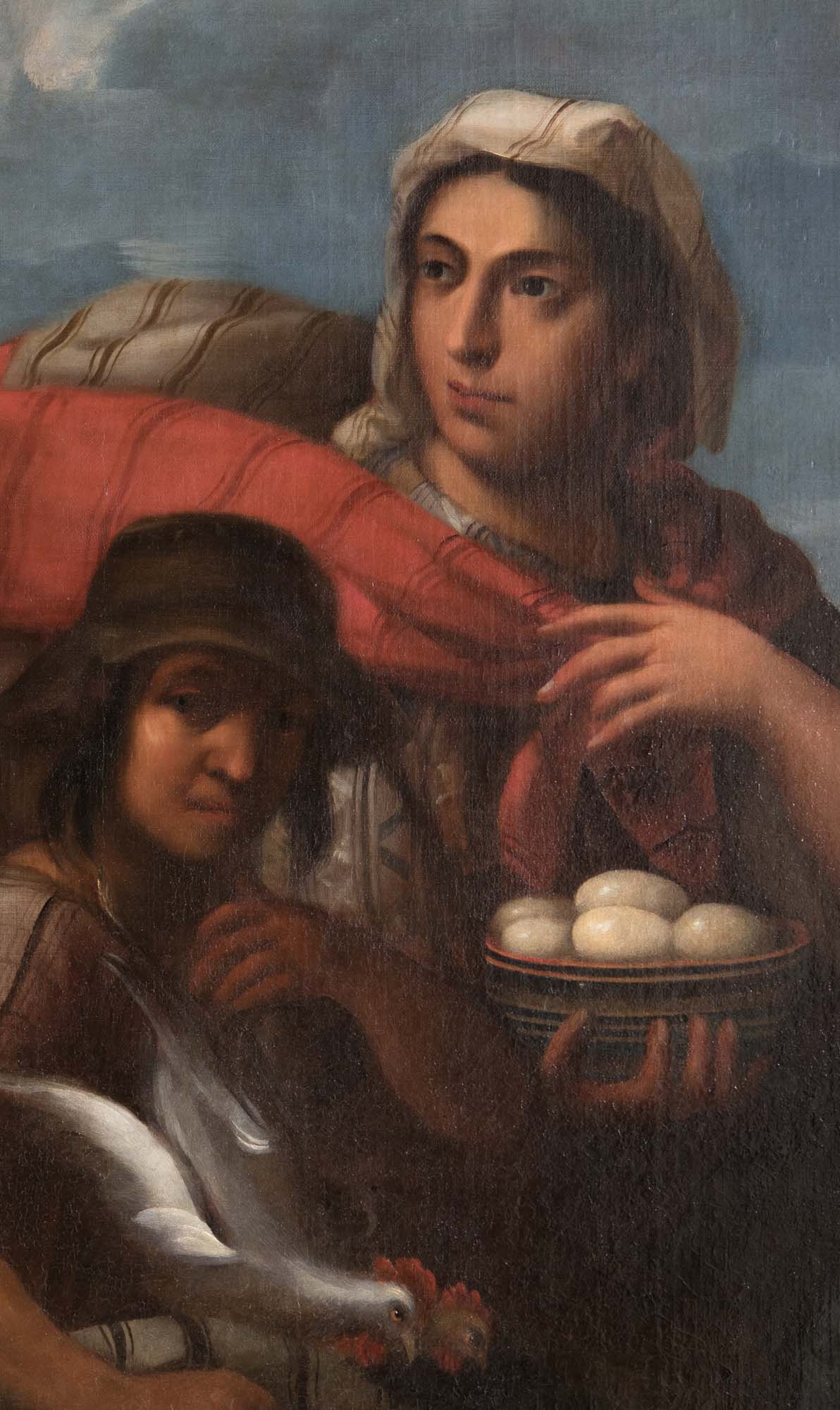
Explore the image gallery to see close-ups of the Casta Painting 'Indios Otomites que ban a la Feria' showing the people in them.
Casta Paintings Gallery
Casta: The Origins of Caste Documentary
Created by Opel22, this documentary is a journey of discovery of these important artworks. Engage with experts as they decode the stories behind these artworks, witness their meticulous restoration, and celebrate their grand unveiling. Immerse yourself in a rich blend of history, culture, and artistry while confronting the complex connections to racism, colourism, and the haunting legacy of colonization and enslavement.